Venturing into the great outdoors with your backpack full and your tent at the ready is one of life’s greatest but simplest pleasures. It might be the idea of being totally self-sufficient for a few days that draws you, or simply that you crave a little quiet time in nature. Whatever the reason, consider these five tips before heading out on your first camping experience.
1. Always be prepared
Like any holiday, camping trips take a fair amount of planning. Once you’ve decided on the dates and the location (and called ahead to make sure a site is available at the chosen time), draw up a list of everything you think you’ll need (which may be affected by your choice of location). Once you’ve made the list, you’ll easily be able to separate the ‘must haves’ from the ‘nice to haves’, which will greatly aid the packing process. Consult a weather forecast before you leave, in order to get some guidance on what clothing to take. Draw up a menu for all the meals you’ll need while away. Then you’ll know which ingredients you need, as well as where is best to store them – for example, in a cooler box, or somewhere safe from being squashed … you get the idea. Always have a back-up plan: you might intend to spend every day outdoors soaking up the sun, but make sure you have rainy day activities planned too, just in case.
2. Learn the ropes
Before you leave on your first camping trip, find some time to practise setting up your tent in the garden or a nearby field. This might feel a bit too much of a fuss, but it’s a great idea to test out your equipment thoroughly in controlled conditions, especially if it’s new, and to get a clear idea of what goes where. By setting up camp at home, you’ll quickly discover the ins and outs of your gear – noting its quirks and limitations, and perhaps even its flaws. Rather discover that you need a certain tool, technique or aid (such as a torch) while still on familiar territory, and not while negotiating a brand new environment and everything that comes with the unknown. Even if it’s not your first trip, it’s still advisable to test out your kit to make sure it’s all in working order, especially if it’s been in storage for a while.
3. Take care
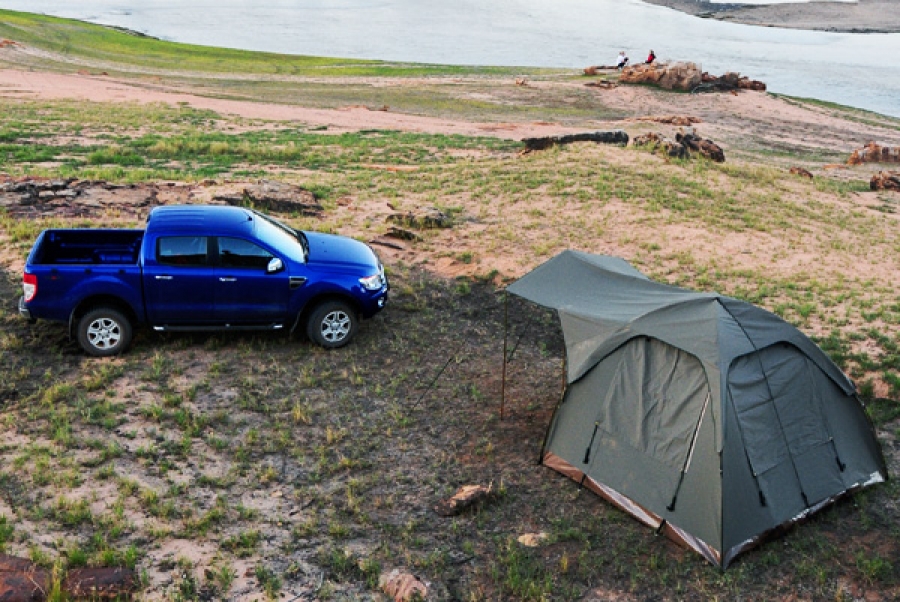
On arriving at your campsite, make sure you keep all your things together. When setting up your tent, mark out a specific area for all your pegs, bags, tools and tongs. It might seem obvious, but so many people forget. If you’ve made a point of remembering where your things are, you’ll be able to find them easily after nightfall, or if you’re ever in a hurry. Treat your tent with care. It probably cost you quite a bit, and it’s your home away from home, after all. Take precautions to protect the interior and exterior: for instance, lay out groundsheets (to avoid ripping or tearing from camp chairs or sharp stones), avoid cooking or braaiing too close to the tent, and batten down the hatches, flaps and awnings when faced with strong winds and heavy rain. Looking after your gear every time you go camping, and getting your children to do the same, will mean happier and more comfortable camping experiences in future.
4. Spare time
Whether camping is new to you or not, carrying spare tent fabric and a tent repair kit is highly recommended. You never know how, why or when an inconvenient misfortune might strike, so it’s always better to err on the side of overcaution by taking a few spare tent pegs, an extra roll of duct tape and, of course, that vital repair kit for emergency mending. Depending on the amount of space available in your vehicle, consider taking a spare sleeping bag and a few extra pieces of clothing. These are two essentials you don’t want to be without if your primary set becomes wet or damaged.
5. Up close, but not too personal
When choosing your camping site, you might automatically gravitate towards public facilities
like the ablution block or pool area. If it’s socialising you’re after, you’ve probably picked a good spot, but if your preference is peace and quiet, then setting up camp next to the communal pool, braai area, ablution blocks or a playground is not the best option. The convenience may appeal to you, but always remember to take into account the other campers around you, including those yet to arrive. The early mornings and late evenings bring an increase in movement, chatting and a noise generally in these areas, so if you’re looking for some quiet time, find a site that’s protected from both elements and people.
This Camping Tips article first appeared on CaravanSA